Merit Increase in a self-managed group. Experiment 1: Best Employee

We did it, we removed hierarchy and managers, we are now all equal. Great.

However, as you may already know, most content in this blog refers to a self-managed office within the context of a bigger, hierarchical organisation, our self-management can only get so far, but still, pretty fun.

Before we realise, is that time of the year when the “bigger company” asks us to submit our proposals for promotions and salary increases. There used to be a clear step-by-step process for this, centralised through the managers. With no managers, what do we do now?

To be honest, we didn’t pay much attention to this and caught us by surprise, the deadline was around the corner and we had to find a formula very quickly and send out our proposals to corporate. We decided to run a simple voting.

voting

The process was simple, every employee could fill in a ballot entering the name of the 3 employees they thought to deserve a promotion/raise. Each employee could vote only once, votes were anonymous and hence they could vote for themselves. The name on the first position would get 3 points, the name on the second position 2 points and the name on the third positions 1 point. Next to each name we needed to enter the reasons why we are proposing that employee.

At the end of the day, we proceeded to the scrutiny, counting all the votes in front of anybody who wanted to witness it.

The results were simple, we added up all the points and produced a ranking with the top 10 employees. That is the list that would be submitted to higher management for their consideration, they would still have the final word. The full list was available for anybody to see upon request.

A few days after this process was completed, we ran a retrospective about this method, and these are some things that came up:

What worked

  • Great progress consolidating self-management, for the better or worse, people were more in control than ever when it comes to deciding who outperformed. To trust them with such a sensitive topic, was consistent and giving a clear message.
  • People were pretty happy with the results. People at the top of the list were highly respected and made sense to most.
  • Corporate was also happy. They had a list of candidates where they could still apply their own rules, based on current salaries, seniority, recent promotions, etc.

What didn’t work so well

  • Many people shared that 3 candidates weren’t enough. They had more people in mind that deserve recognition and they would have liked to include more names in their vote.
  • Around ten people weren’t voted by anybody and others got very few points. Since there was only feedback given to people voted, there was nothing for the rest to work with and improve. Additional feedback initiatives were necessary for people to find out why they got so few or no votes.
  • This happened at the end of the year and we know this is not ideal. People tend to reward more recent behaviour and forgets about great work done earlier during the year.
  • People followed different criteria, which can be healthy but also confusing. There were some vague guidelines about what things to consider when selecting your candidates but still many people expressed very different approaches to their voting and that didn’t help towards a unified culture we wanted to create where behaviour is most important than results.

In conclusion, as a first attempt, it was a success but it clearly showed some flaws to be improved. In any case, it was very easy to set up and improvise so no excuse for not trying!

Wanna see what we did next? Check out Experiment 2
 

Peak 2: Mauna Kea – Climbing the Self Management Mountain Range

2-mauna kea

Mauna Kea – Work

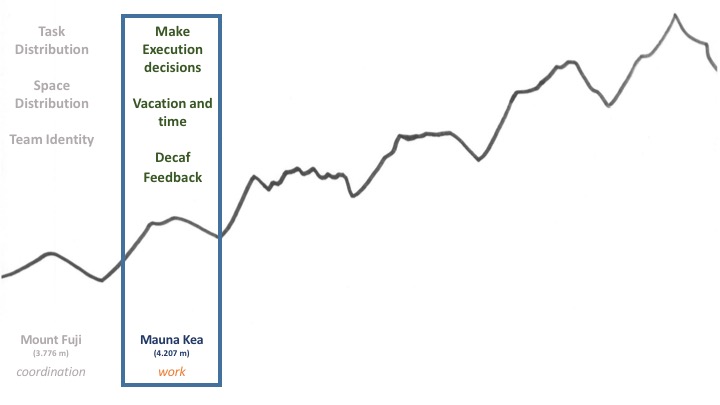
Mauna Kea in Hawaii is probably less popular and touristy than Mount Fuji and it’s already 4000 meters high, so we’ll start feeling the lack of oxygen. When a self-organized team climbs up here we can expect they’ll have to deal with work-related decisions, so we call this one this the “work mountain”.

Execution decisions

While in Mount Fuji we saw how a team could decide among them who would do what, in this step we find how a team performs their tasks, meaning what solution to choose and apply to a given problem. Our experience is limited to software development teams but we believe this step is generic enough that the main idea can be applied to teams in different industries. So if we’re talking about a software development team this would be deciding the architectural and implementation details, maybe the technical solution they’ll use and so on. This is usually easy to delegate for a manager and very positive for the team as it makes them feel more engaged and helps them find a solution that takes into account the vision of every team member.

Vacation and time

Vacation approval and working times are some low added value tasks which are pretty easy to delegate, and yet some of those we still find a lot of managers handling. Delegating part or all of these to teams can be very beneficial for both teams and their managers, whose main task will be to let go of the doubts they may have that the team takes advantage of this.

Most of the teams we have worked with have reached this level, meaning they don’t need to submit their vacation request to any manager approval. Instead, they need the ability to see who in their team is on holiday and when, so that they can ask the group for a convenient time for vacation days and the group can safely agree, based on an internal working agreement about team availability.

Within these teams, working times have more or less the same rules as holidays. What is important for these teams is that the job they committed to do gets done. Some of this job will require close collaboration, for which being together in the office will be key. Other parts won’t require close collaboration and can be done by individuals at the time they prefer, in the office or at home. This is especially clear to teams working in software development but can be easily applied to other teams in different industries.

Decaf feedback

A constant flow of feedback is obviously something extremely important in the agile world and we are fond of finding many alternative ways to keep this flow alive. We took all these possible practices for fostering feedback inside teams and classified them as coffee, because good coffee needs to wake you up, right? We believe good feedback has to have the same effects as coffee, so this feedback that wakes you up is what we call strong feedback. A decaf feedback, on the other hand, is feedback that is just okay but is not waking you up. What makes feedback stronger or softer in this scale is the emotional investment in the exercise, so how hard is to give or to receive feedback, emotionally speaking, for the individuals involved.

At this point in the climbing teams usually start to use decaf feedback. An example of decaf feedback could be an anonymous online survey, in which nobody’s looking at your face while you give feedback, nobody knows who you are and you can just say anything you want. This is pretty easy to do for the giver, even if it could be hard for the receiver, therefore it’s not equally enriching for both, and even inexperienced teams who are new to feedback can use these practices.

How are you doing with oxygen breathe? Should we keep climbing? You’re ready for the next level. We’ll be close to almost 5000 meters soon visiting Monte Bianco.

Peak 1: Mount Fuji – Climbing the Self Management Mountain Range

1-mount fuji

Mount Fuji – Coordination

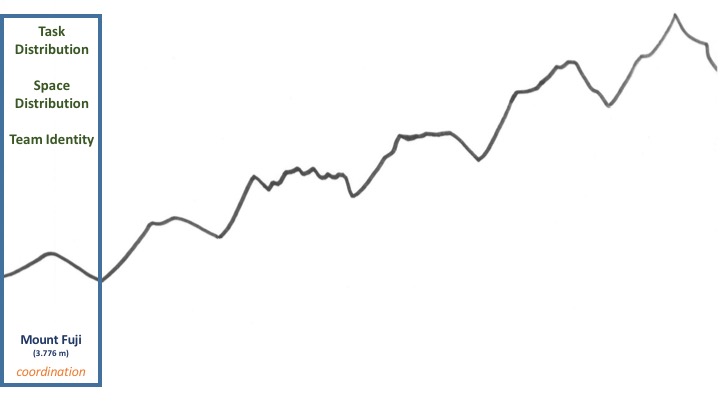
The first peak in this model is Mount Fuji, with its 3776 meters. If you’ve been there you may have noticed that it’s a pretty touristy place. In fact you can find experienced climbers but also totally inexperienced people who get there by bus.

We associate this mount with coordination, the first stage of self organisation in this model. This is when a team starts to self organize, which usually in our experience comes in the following forms.

Task distribution

Teams that are new to self organization usually follow Scrum or Kanban rules and visualize their work on physical boards where they can easily see who’s responsible for each task. In this phase team members love using magnets or other fancy sticky labels to see who’s doing what after discussing among themselves how to best divide the work and how to best leverage individuals’ skills in the team. Sounds familiar?

Space distribution

Where should teams sit? Who gets the brightest spots? Who gets the noisiest? Answering these questions may seem of little importance (if you’re lucky to be in a place with some self management in place already) but you’d be surprised by how many companies whose teams have managers making decisions for them struggle with this problem every time they form teams or change their members. Solving this puzzle can be an extremely painful process, with competing managers, back and forth consultations, half decisions,  long meetings, layouts that result from exhaustion rather than consent and ultimately, unhappy people.

A few years ago our office had this same problem to solve after reshuffling teams but we were in a favorable situation where we could decide as a group instead of having managers do that.

As scrum masters we were asked to come up with a process to solve the puzzle collectively, and we took the opportunity to be creative and add some level of self organization in the process. We tried to simplify it as much as we could and came up with a funny way to it.

We took all the teams involved to a session and asked them to elect a spokesperson on the spot to represent each team. Then, we gathered all the spokespersons around a map of the office and gave them as many little post it paper balls as team members in their team, each team a different colour, and asked them to place those paper balls on the layout together, discussing among themselves and bringing the voice of the teams they represented. We timeboxed it to 30 minutes and asked to come up with a viable layout in that time.

teams distribution paper balls

We were a bit scared at the beginning but interestingly there was no tension or argument, and people actually were very happy to take part into that because they felt like they had a voice in the decision. Simple, quick, sweet.

Team identity

Team identity can mean many different things to different people. In our experience team identity starts from very basic things like a name and logo, and part of our job back when we formed new teams a couple of years ago was to help them figure those out. One of the first things we did with them was to encourage them to call themselves something more meaningful than just “Service X Team” or “Component Y Team” (yes, that’s also you “API Team no. 2237” out there).

Another great way to let teams find their identity is by helping them find their values, which we usually do by facilitating that discovery process with them. Values are what’s important for them, what makes them angry, sad or proud of what they do. Interestingly, different teams in our experience found very different values which represent them quite well.

By helping them find their identity we helped them finding what makes them unique, so in way we could say we helped them like Sherpas would do (okay, considering this was Mount Fuji maybe we did more like bus drivers than Sherpas).

Start with Fuji

These are just a few examples of things that managers can start to delegate to teams. We consider these in our first level because they can do no harm to the business but they can mean a lot to a team building their confidence in making decisions.

Stay tuned and climb the next mountains with us!

Climbing the Self Management Mountain Range

Self management may mean different things to different teams depending, among other things, on the scope in which they are being self managed. I’ll give you an example. In Scrum we say that teams are self organised, but what does that mean? Does it mean that they can distribute tasks among team members as they find appropriate? Sure. Does it mean they can decide on how to take days off? Maybe. Does it mean they can decide how to increase the salary of someone within the team? Eeeeh, What?

This model is a simplification of this very complex topic and help managers, coaches and leaders in their approach to self management and delegation.

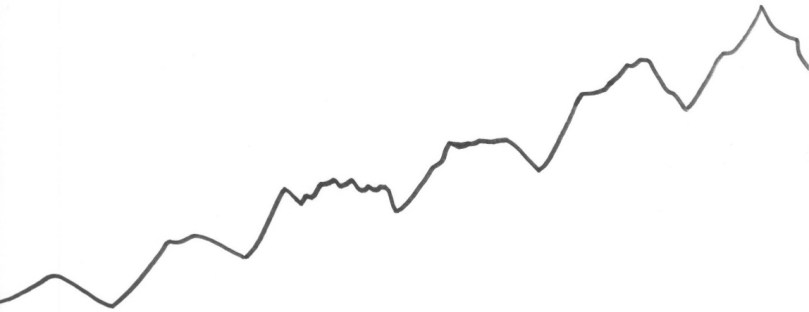
After several years of working with self managed teams in different countries, we found that Self management is very much like climbing mountains. It can be enjoyable and healthy but also challenging and dangerous. It’s definitely not for everyone and the higher you wanna go, the more practice and preparation you need. You can easily reach a low peak but you need training before you can climb a higher challenge. In the following model, we show the different peaks you will find while climbing towards self management, where to start and where to move next.

The self management mountain range, is based on real mountains (can you guess the names based on their shapes?) and each one of them represents a step towards a more mature self managed group.

SMMR-cropped

We’ll write separate posts to describe what each mountain looks like, with real life examples of teams that we’ve coached or found at the different levels. Are you ready to start climbing? Let’s start with Mount Fuji!